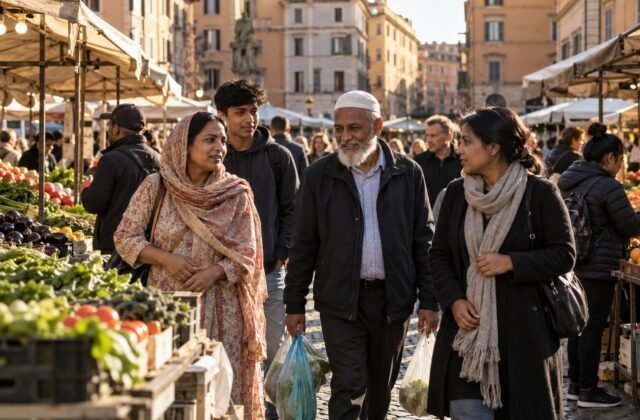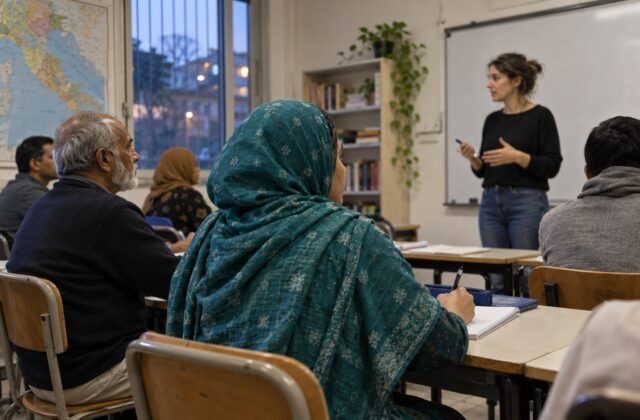
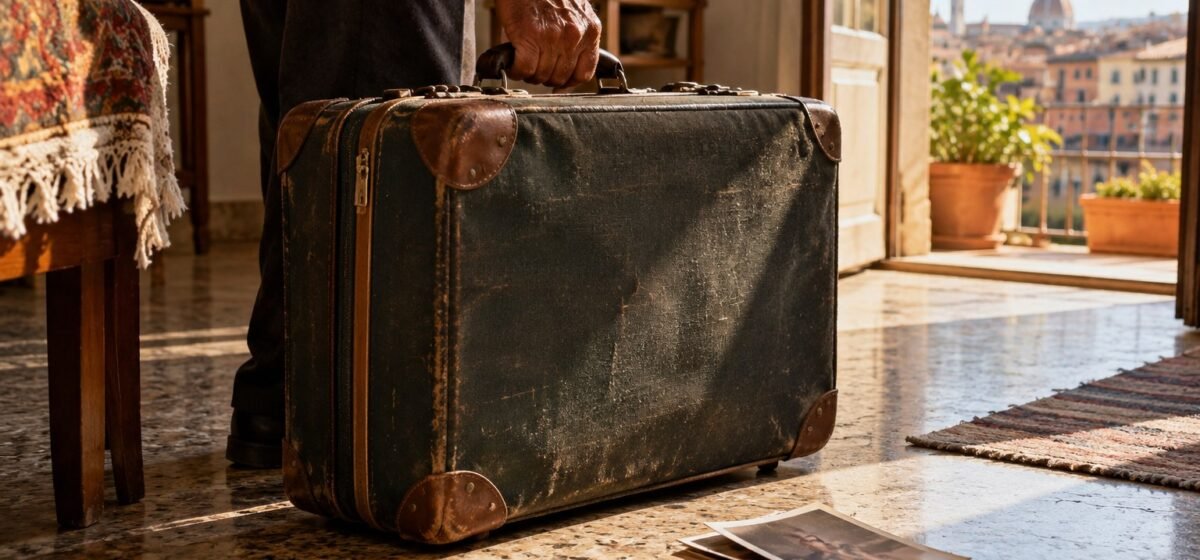
In Bengali, bidesh means “foreign land”. For thousands of Bangladeshi families, for forty years that land has been called Italy. Sociologist Francesco Della Puppa of Ca’ Foscari University of Venice traced this story for Germany’s Federal Agency for Civic Education.
The pioneers
The first Bangladeshis arrived in the 1980s; Italy became a major destination in the 1990s, when France, Switzerland, the Netherlands and earlier the UK closed their doors. They were often educated, middle-class young men who took jobs as dishwashers, street vendors, cleaners or factory workers.
The amnesties
Regularisations shaped the community’s history: about 100 Bangladeshis regularised in 1986, almost 4,000 in 1990 and more than 70,000 in the early 2000s. Until the late 1990s, 92% lived in Rome, the second-largest Bangladeshi community in Europe after London.
Towards the north-east
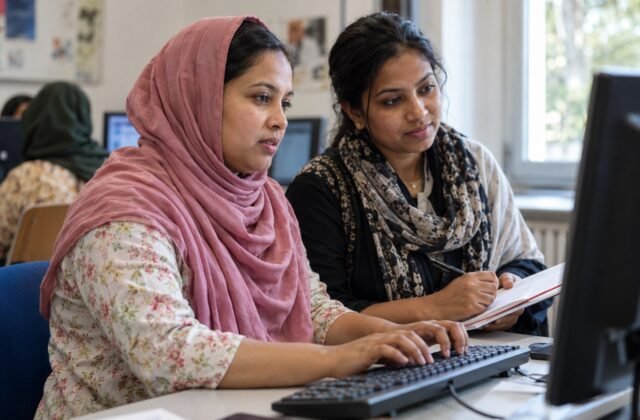
With their papers in order, many moved to the industrial provinces of the north-east: metalworking, shipyards, tanneries. Wives and children followed through family reunification.
And then London
After the 2008 crisis, some Bangladeshis who had become Italian citizens moved on, mainly to the United Kingdom, seeking more opportunities for their children and a larger community. Brexit slowed this movement. Today the community in Italy is larger than ever: the story of the Italian bidesh goes on.