Of all the data on the Bangladeshi community in Italy, one figure stands out: only 11.4% of women are employed, against 83.8% of men. Female inactivity — women neither working nor looking for work — is 85.4%. Women are just 6% of the Bangladeshi workforce and 2.8% of new hires.
Young women
The gap appears early. Among 18–24-year-olds, 33.4% of young Bangladeshis are neither studying nor working; among young women the share rises to 69.7%. Yet girls make up almost half of Bangladeshi pupils at school.
The causes
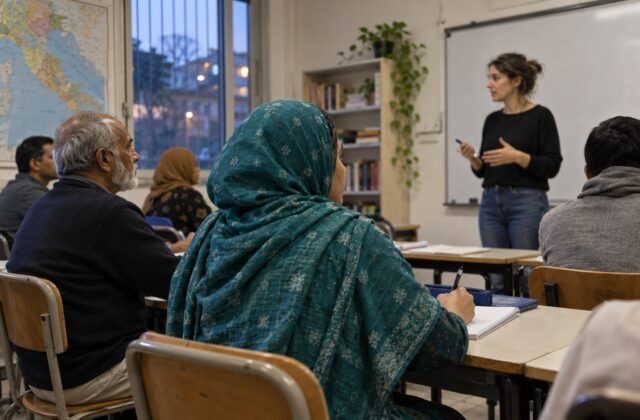
- Language: many women arrive through family reunification and have few chances to learn Italian.
- Childcare, in a community with a very high birth rate and few grandparents nearby.
- Social networks: families and the community often expect the man to be the one who works.
- Difficulty getting qualifications obtained in Bangladesh recognised.
What works
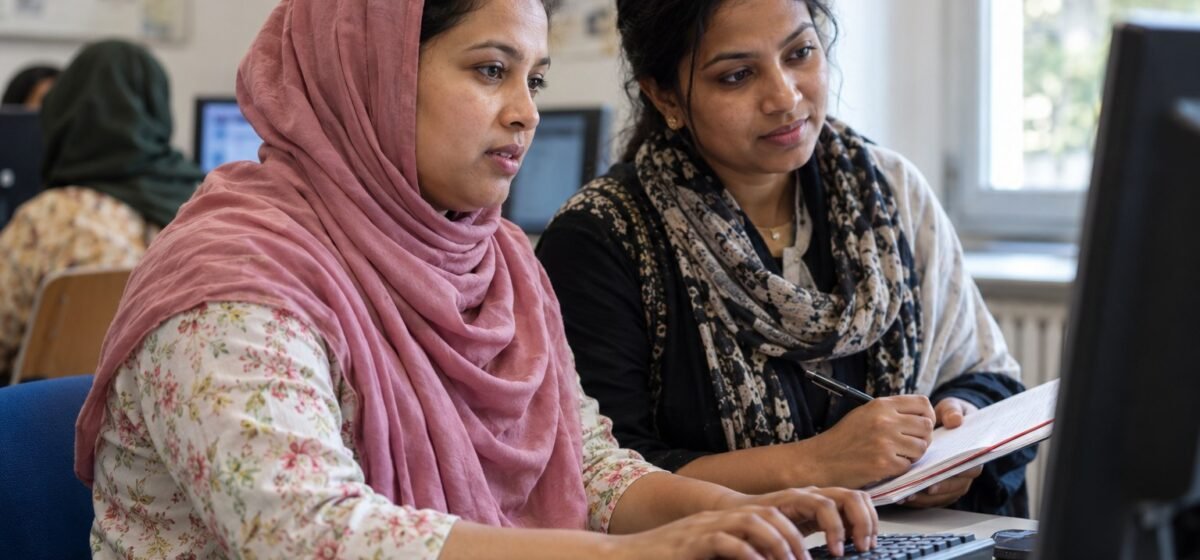
Italian courses with childcare or for women only, female cultural mediators in schools and family clinics, short training paths in sectors such as care work, tailoring, catering and education services. Public debate — including in Venice, where the mayor linked dialogue with the community to the condition of women — is making the issue ever more central.
The potential is large: a family with two incomes more easily meets the thresholds for reunification, the long-term permit and citizenship.